Why Strength Training Matters More Than Ever For Cyclists Over 40
The Climb (#188)
Introduction
Most cyclists over 40 know they should probably do some strength training.
But knowing that and actually doing it are two very different things.
Because for a lot of cyclists, the gym still feels like something that belongs to someone else.
They think strength training will make them bulky.
They worry it will make their legs too tired to ride.
They don’t know what exercises to do.
They don’t know where to fit it around their cycling.
Or they tell themselves they’ll start next week.
Then next week becomes next month.
Then another year goes by and they’re still relying on the bike to do everything.
But this is where the problem starts.
Because cycling is brilliant for your cardiovascular fitness.
It can build a huge aerobic engine.
It can improve endurance, health, mood, and fitness.
But cycling alone does not give your body everything it needs.
Especially after 40.
If you want to lose weight, ride stronger, protect your body, improve your power, and stay fit for the next 10, 20, or 30 years, strength training is not something to keep avoiding.
It might be the missing piece.
The Problem With Only Riding Your Bike
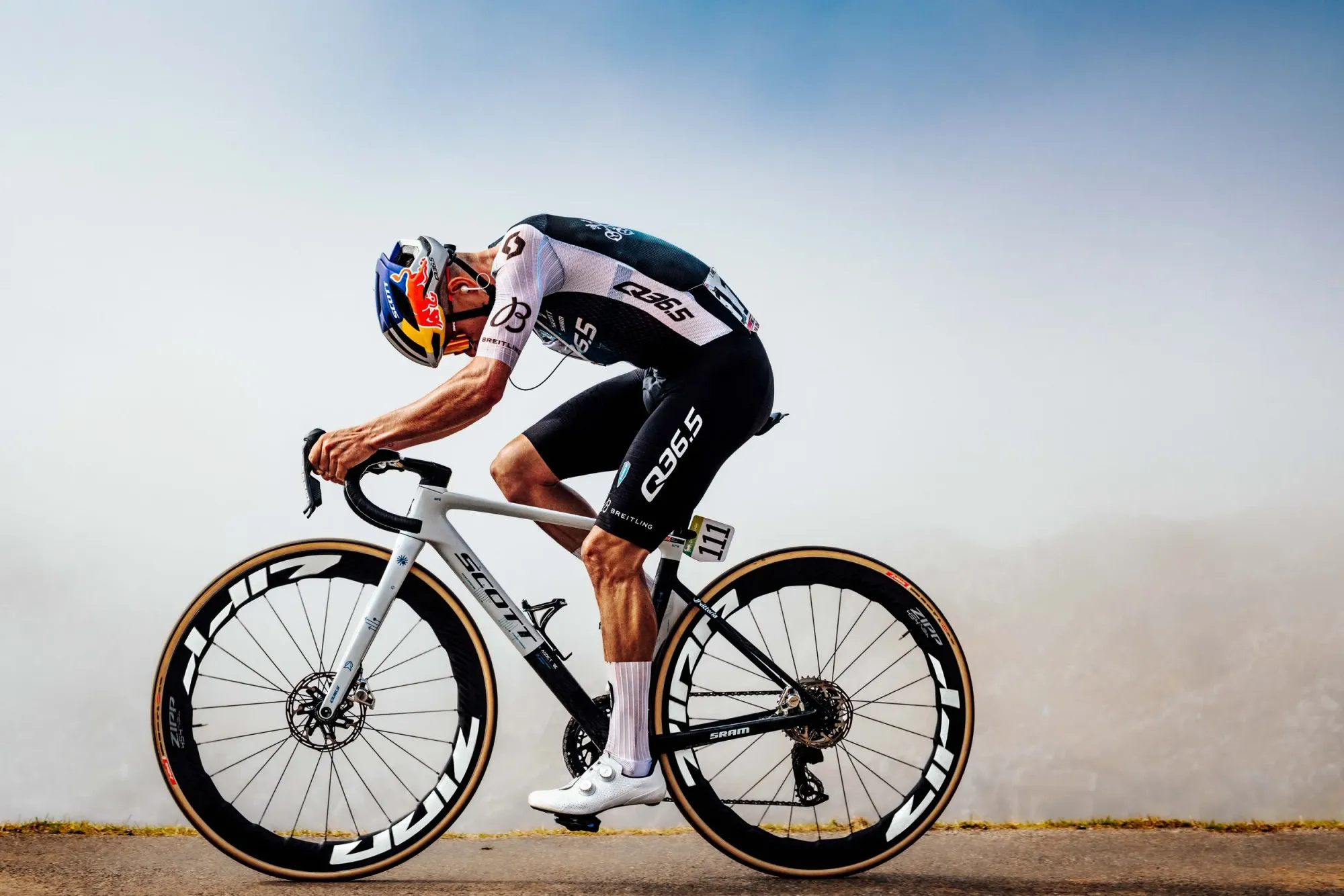
Cyclists are very good at doing more cycling.
If they want to get fitter, they ride more.
If they want to lose weight, they ride more.
If they want to climb better, they ride more hills.
If they want to get faster, they add another interval session.
And don’t get me wrong, the bike matters.
You need to ride your bike to improve at riding your bike.
But after 40, your body needs more than just repetitive time in the same position, producing force through the same range of movement, week after week.
Cycling is low impact.
That is one of the reasons so many people love it.
It is kinder on the joints than running. It allows people to train for longer. It gives you a huge aerobic return without the same level of impact stress.
But the downside is that cycling does not do much to load your bones.
It also does not challenge your body through a wide range of movement.
And it does not automatically protect you from losing muscle as you age.
That matters.
Because once you move into your 40s, 50s, and beyond, maintaining muscle, strength, bone health, mobility, and resilience becomes more important.
Not less.
Strength Training Is Not About Becoming A Bodybuilder
One of the biggest objections I hear from cyclists is this:
“I don’t want to get bulky.”
And I get it.
Cyclists care about weight.
They care about power-to-weight.
They care about climbing.
They don’t want to add unnecessary mass that doesn’t help them ride better.
But strength training for cyclists is not bodybuilding.
You are not training to stand on a stage.
You are not trying to add as much muscle as possible.
You are training to become stronger, more resilient, more powerful, and more durable.
There is a big difference.
A well-designed cyclist strength programme should support your riding, not compete with it.
The goal is not to leave the gym destroyed.
The goal is to build strength you can use.
Better force production.
Better stability.
Better posture.
Better control.
Better ability to handle load.
Better resilience when training volume increases.
And for cyclists over 40, better protection against the gradual decline in muscle and strength that happens with age.
Why Strength Training Helps With Fat Loss
Most cyclists think about fat loss through one lens.
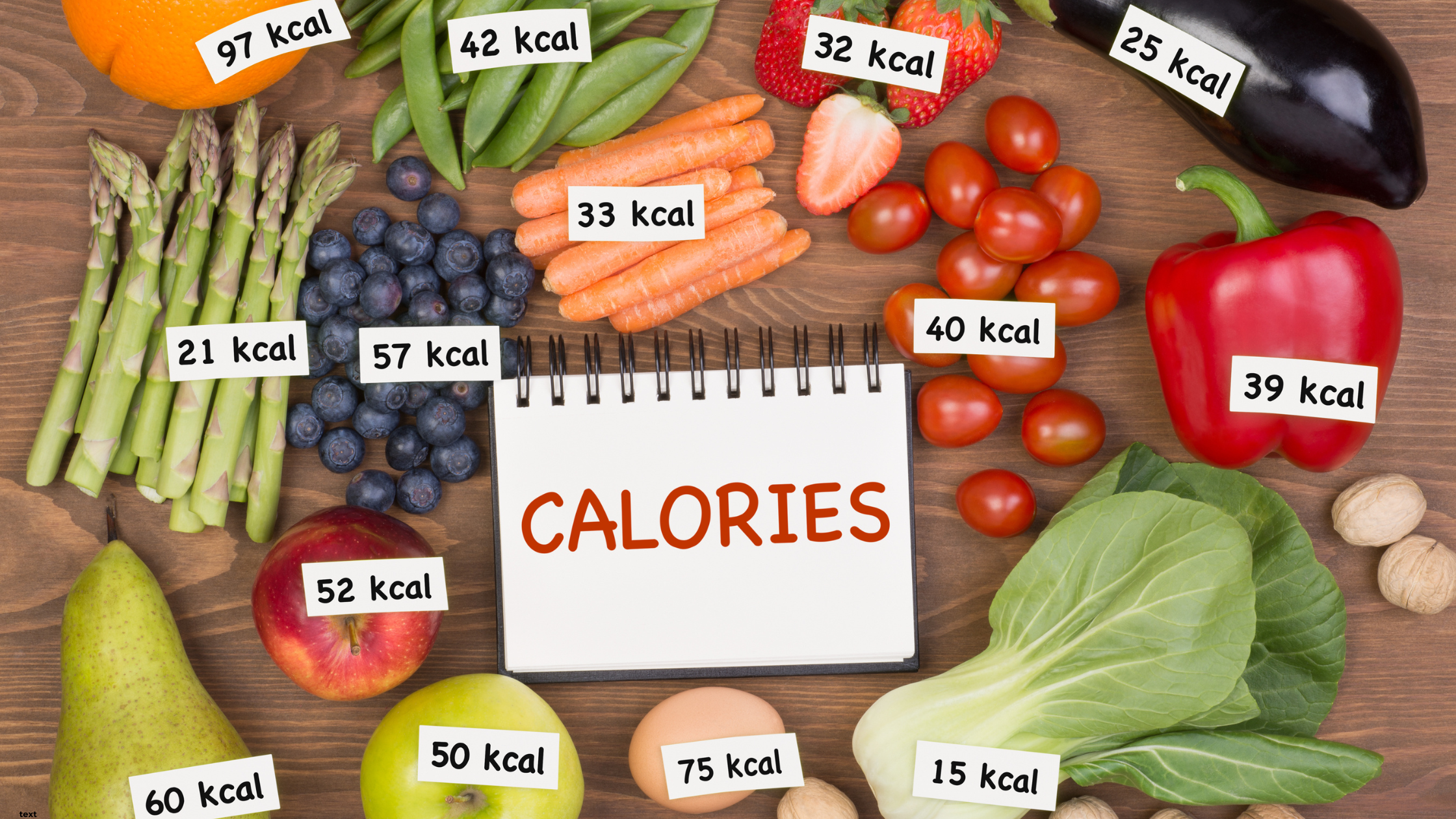
Calories.
And yes, calories matter.
If you want to lose body fat, you need to create an energy deficit over time.
But the way you lose weight matters.
Because the goal is not just to become lighter.
The goal is to become leaner, stronger, and more capable.
That means you want to lose fat while maintaining as much muscle as possible.
This is where strength training becomes important.
If you diet without strength training, especially if protein intake is poor, there is a greater risk that some of the weight you lose will come from muscle as well as fat.
And for cyclists, that can be a problem.
Because muscle helps you produce power.
Muscle helps support your joints.
Muscle helps with everyday function.
Muscle helps you feel stronger off the bike.
And from a body composition point of view, maintaining muscle while losing fat is what makes someone look and feel athletic, rather than just smaller.
This is why I don’t just want cyclists to lose weight.
I want them to lose the right type of weight.
A lighter cyclist is not automatically a better cyclist.
A lighter cyclist who has lost power, strength, confidence, and recovery capacity may actually ride worse.
But a cyclist who loses fat, keeps muscle, fuels training properly, and gets stronger?
That is where performance can really improve.
What I See With Clients
This is something I’ve seen repeatedly in coaching.
Cyclists often come to me thinking the answer is more time on the bike.
But when we look at the full picture, the missing piece is often strength, structure, recovery, and nutrition.
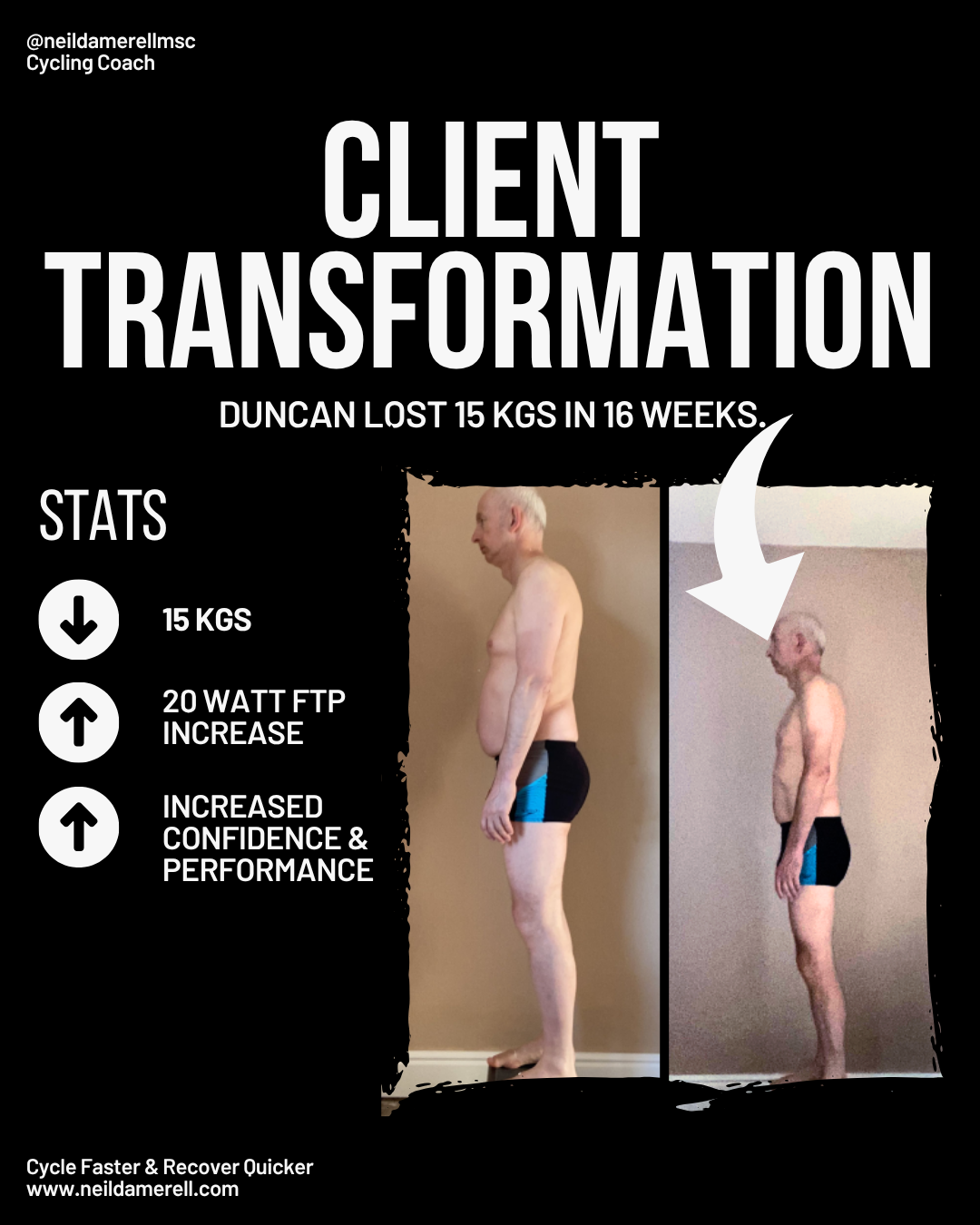
Duncan is a great example.
When he started, the goal was not just to ride more. We needed to improve his body composition, his fuelling, his strength, his consistency, and his confidence on longer rides.
Over the coaching period, he lost a significant amount of weight, improved his power-to-weight, resolved issues with cramping, and went from struggling with longer rides to completing regular 100-mile rides.
That didn’t happen because he just rode himself into the ground.
It happened because we built the full system around him.
Training.
Nutrition.
Fuelling.
Recovery.
Strength.
Mobility.
The same with Martin, who came into Cycle Lean from more of a weightlifting and bodybuilding background.
He wanted to improve his cycling fitness, lose weight, and still maintain some of the strength work he enjoyed.
In the project, he lost around 15lb, improved his cycling structure, and learned how to make strength training support the bike rather than sit in competition with it.
And that is the key.
Strength training should not be something that ruins your riding.
Done properly, it should help you ride better.
Why Cyclists Over 40 Need Strength More Than They Think
After 40, you can still get fitter.
You can still improve your FTP.
You can still get leaner.
You can still build strength.
You can still ride big events.
But the way you train needs to respect the fact that your recovery, life stress, muscle mass, sleep, hormones, and injury risk all matter.
You cannot just keep adding more cycling forever and expect the body to keep responding.
At some point, you need to ask:
Is my body strong enough to handle the training I’m asking it to do?
Can I hold good posture on the bike when I’m tired?
Can I produce force when the road kicks up?
Can I recover from harder sessions?
Can I handle long rides without my back, hips, knees, or neck becoming the limiting factor?
Can I lose weight without losing strength?
This is where strength training earns its place.
It is not just about lifting weights.
It is about keeping your body capable.
The Gym Does Not Need To Take Over Your Life

Another mistake cyclists make is thinking strength training has to be complicated.
It doesn’t.
You don’t need five gym sessions per week.
You don’t need 90-minute workouts.
You don’t need 15 different exercises.
You don’t need to train like a powerlifter.
For most cyclists over 40, one to two strength sessions per week is enough to make a meaningful difference.
Especially if those sessions are consistent.
A simple session could include:
A squat pattern.
A hip hinge.
A single-leg movement.
A calf exercise.
An upper body pull.
An upper body push.
Some core work.
That is enough.
The exercises can change depending on ability, injury history, equipment, confidence, and time.
But the principle stays the same.
Train the whole body.
Build strength gradually.
Don’t destroy yourself.
Repeat it consistently.
How To Fit Strength Around Cycling
This is where most cyclists get stuck.
They start strength training, feel sore, then decide it is ruining their cycling.
But often the issue is not strength training itself.
It is poor placement.
If you do heavy legs the day before your hardest interval session, of course your ride will feel terrible.
If you go from no gym work to three hard sessions in one week, of course your legs will complain.
If you lift too much too soon, soreness will be high.
The answer is not to avoid strength training.
The answer is to programme it properly.
For most busy cyclists, I like to place strength work away from key bike sessions where possible.
For example:
Monday: Strength training.
Tuesday: Interval session.
Wednesday: Easy ride or rest.
Thursday: Strength training or Zone 2.
Friday: Rest.
Saturday: Longer ride.
Sunday: Easy ride or rest.
That is just one example.
The exact structure depends on the person.
But the principle is simple.
Protect the key rides.
Keep strength consistent.
Avoid stacking hard stress on top of hard stress.
And don’t be afraid to reduce gym volume during harder cycling blocks.
Strength training should support the goal of the phase you are in.
Strength Training During Fat Loss

When a cyclist is trying to lose weight, strength training becomes even more useful.
Not because it burns a huge number of calories during the session.
That is not the main reason.
The main reason is that it helps protect muscle and performance while body weight comes down.
This is especially important if someone is in a calorie deficit.
If you are eating less, training hard, riding long, and not lifting, your body has very little reason to hold onto muscle.
But if you combine a sensible calorie deficit with enough protein, structured riding, and strength training, you create a much better environment for fat loss while maintaining strength.
This is the difference between just losing weight and improving body composition.
And that is what most cyclists actually want.
They do not just want the scale to go down.
They want to feel better in kit.
Climb better.
Ride stronger.
Have more confidence.
Avoid feeling fragile.
And still have energy to train.
The Biggest Mistake Cyclists Make In The Gym
The biggest mistake is doing too much too soon.
They go in motivated.
They smash a leg session.
They can’t walk properly for four days.
Then they decide strength training doesn’t work for cyclists.
But that’s not strength training.
That’s just poor load management.
Your first few weeks should feel almost too easy.
You are building the habit.
You are learning the movements.
You are allowing the body to adapt.
You are trying to leave the gym feeling better than when you walked in.
Once that foundation is there, you can gradually increase load, reps, sets, or complexity.
The same way you wouldn’t start cycling with a five-hour mountain ride, you shouldn’t start lifting with a session that leaves you ruined.
Start small.
Progress gradually.
Stay consistent.
A Simple Starter Session
If you are a cyclist over 40 and you keep avoiding the gym, start here.
Warm up for five to ten minutes.
Then complete:
Goblet squat.
Romanian deadlift.
Split squat or step-up.
Calf raise.
Seated row or dumbbell row.
Press-up or chest press.
Dead bug or plank.
You could do two to three sets of each.
Keep the reps controlled.
Leave a couple of reps in reserve.
Focus on movement quality.
The goal is not to prove how hard you can train.
The goal is to build a session you can repeat next week.
Action Steps For This Week
If you currently do no strength training, your first goal is simple.
Do one session this week.
Not three.
One.
Pick five or six exercises.
Keep it controlled.
Do not chase soreness.
Then look at how your body responds.
If your legs are ruined for your next ride, you probably did too much.
If you feel fine and can repeat it next week, you are on the right track.
If you already strength train, ask whether it is actually supporting your cycling.
Is it placed well in the week?
Are you progressing it gradually?
Are you maintaining strength during cycling blocks?
Are you reducing volume when bike intensity increases?
Are you training movements that support the body, or just doing random exercises?
Strength training should have a purpose.
Just like your rides should.
Final Thought
Cyclists over 40 do not need to choose between riding and strength training.
They need both.
The bike builds your engine.
The gym helps build the body that supports it.
If you want to lose weight, strength training helps you protect muscle.
If you want to ride stronger, strength training helps you produce force.
If you want to age well, strength training helps support muscle, bone, balance, and resilience.
And if you want to keep cycling for years to come, your body needs more than miles.
So stop thinking of strength training as an optional extra.
Start thinking of it as part of the plan.
Because after 40, the strongest cyclists are not always the ones who ride the most.
They are the ones who build a body that can keep showing up.
If this has made you realise strength training can’t just be an afterthought as a cyclist over 40, this is exactly what we help you build inside The Cycle Lean Project.
Not random gym sessions.
Not smashing your legs so badly you can’t ride properly.
Not chasing weight loss while losing strength, power, and confidence on the bike.
But learning how to combine structured cycling, smart strength training, better fuelling, nutrition support, and fat loss in a way that actually improves your performance.
The priority list for The Cycle Lean Project is now open.
If you want first access before spaces go public, add your name to the list below.
You’ll get early access, priority pricing, and the best chance of securing a place when doors open.
Whenever you're ready, here are the ways I can help you:
- The Cycle Lean Coaching: Personalised 1:1 Coaching for Cyclists Who Want to Drop 6–12 kg and Add Up To 60 Watts of FTP While Riding 6-8 hours a Week!
- The Cycle Lean Blueprint: The science-backed 12-week blueprint to cycle leaner, climb stronger, and become the most resilient version of yourself.
I am an ambassador for:
Awesome Supplements: Award Winning Supplements — Our plant-based awesome protein powder is 100% UK-made with low-sugar, gluten & dairy-free.
The best protein powder I have ever tasted.
Get 10% off any product/ every time you make a purchase when using my code: DAMERELL10 at Awesome Supplements.