Why Diet Matters More Than Training for Cycling Weight Loss
The Climb (#160)
Many cyclists assume riding more will automatically lead to weight loss, but consistent calorie intake matters more than training volume. This week's THE CLIMB newsletter explains why diet drives fat loss for cyclists, how to create a sustainable calorie deficit, and how busy riders can manage nutrition without overthinking it.
There’s a phrase that comes up again and again in cycling forums, Zwift communities, and coaching conversations:
“You can’t out-ride a bad diet.”
It sounds blunt, but it’s true.
I see this all the time. Cyclists training three, four, even five times a week who are getting fitter, riding stronger, and still not losing any weight. Some are riding more than ever and wondering why nothing is changing on the scales.
The reason is simple. Training improves fitness. Diet determines body weight.
You can spin forever, smash intervals, rack up virtual miles on Zwift — but if calories in are still higher than calories out over time, fat loss won’t happen. No amount of riding changes that basic equation.
That doesn’t mean training doesn’t matter. It does. It just plays a different role.
Training protects performance while weight loss happens elsewhere.
For cyclists, the goal isn’t to lose weight at the expense of power, energy, or enjoyment. It’s to lose fat while staying strong. And that’s where sensible nutrition comes in.
The mistake a lot of riders make is swinging between extremes. They either try to eat “perfectly” for a week and burn out, or they assume training volume will cancel out whatever they eat.
Neither works long-term.
What does work is boring, repeatable consistency.
A small calorie deficit beats a big one every time. You don’t need to starve yourself or cut carbs aggressively. In fact, doing that usually backfires by killing training quality and increasing hunger later in the day.
Protein is the anchor. Hitting a consistent protein target helps control appetite, supports muscle retention, and keeps power levels stable while weight comes down. Carbs still matter too, especially around harder sessions. Fuel the work that matters. Don’t fuel out of habit.
For busy cyclists, simplicity is everything. You don’t need complex meal plans or constant tracking forever. A few consistent meals, awareness of portion sizes, and understanding where calories creep in make a huge difference.
This is why many riders see fitness improvements first, but weight only changes once nutrition is addressed properly. I’ve worked with cyclists who improved FTP significantly without losing a single kilo — until we aligned diet with training. Once that happened, fat loss became predictable, not random.
It’s also why adding more training is rarely the answer when weight stalls. More sessions increase fatigue and hunger, which often leads to eating more without realising it. At that point, you’re working harder just to stay in the same place.
The smarter approach is to separate the roles clearly:
Training makes you fitter.
Diet makes you lighter.
Together, they improve power-to-weight.
When nutrition is handled sensibly, cycling becomes far more enjoyable. You’re not constantly tired. You’re not chasing weight loss through suffering. You’re just training consistently and letting the numbers trend in the right direction over time.
Here’s a clean add-on section you can drop straight into the newsletter. It keeps the tone practical and coach-led, and gives readers clear, low-friction steps they can actually follow.
SIMPLE STEPS TO MAKE DIET WORK FOR WEIGHT LOSS (WITHOUT OVERHAULING EVERYTHING)
One of the biggest reasons cyclists struggle with weight loss isn’t lack of effort — it’s lack of awareness.
Most people genuinely don’t know how much they’re eating day to day, especially when training is involved. That’s why the first thing I get clients to do isn’t change their diet at all.
We start with an assessment week.
For seven days, the goal is simple: track what you already eat. No judgement. No restriction. No “being good.” Just honest data. This gives us a clear picture of calorie intake off the bike, how food is spread across the day, and where habits are helping or hurting progress.
From there, we make small, targeted adjustments — not a complete reset.
Here’s how that looks in practice:
1. Track first, change second
Spend one week logging food as it is now. This removes guesswork and stops unnecessary restriction.
2. Identify easy wins
Often it’s not meals that need changing, but snacks, portions, or timing. Small tweaks here go a long way.
3. Anchor protein
Rather than cutting foods, we focus on getting enough protein at meals. Appetite improves, and calories naturally come down.
4. Fuel training, not boredom
Carbs go around harder sessions. Easy days stay lighter. This keeps training quality high without overeating.
5. Create a small deficit, not a shock
The goal is an easy transition into fat loss — not turning habits upside down with a brand-new diet plan.
This approach works because it respects real life. It doesn’t rely on willpower or perfection. It builds on what someone is already doing and nudges it in the right direction.
And that’s why weight loss becomes predictable instead of stressful.
You don’t need a new diet.
You need better awareness, then better decisions.
Client of the Week — Mark
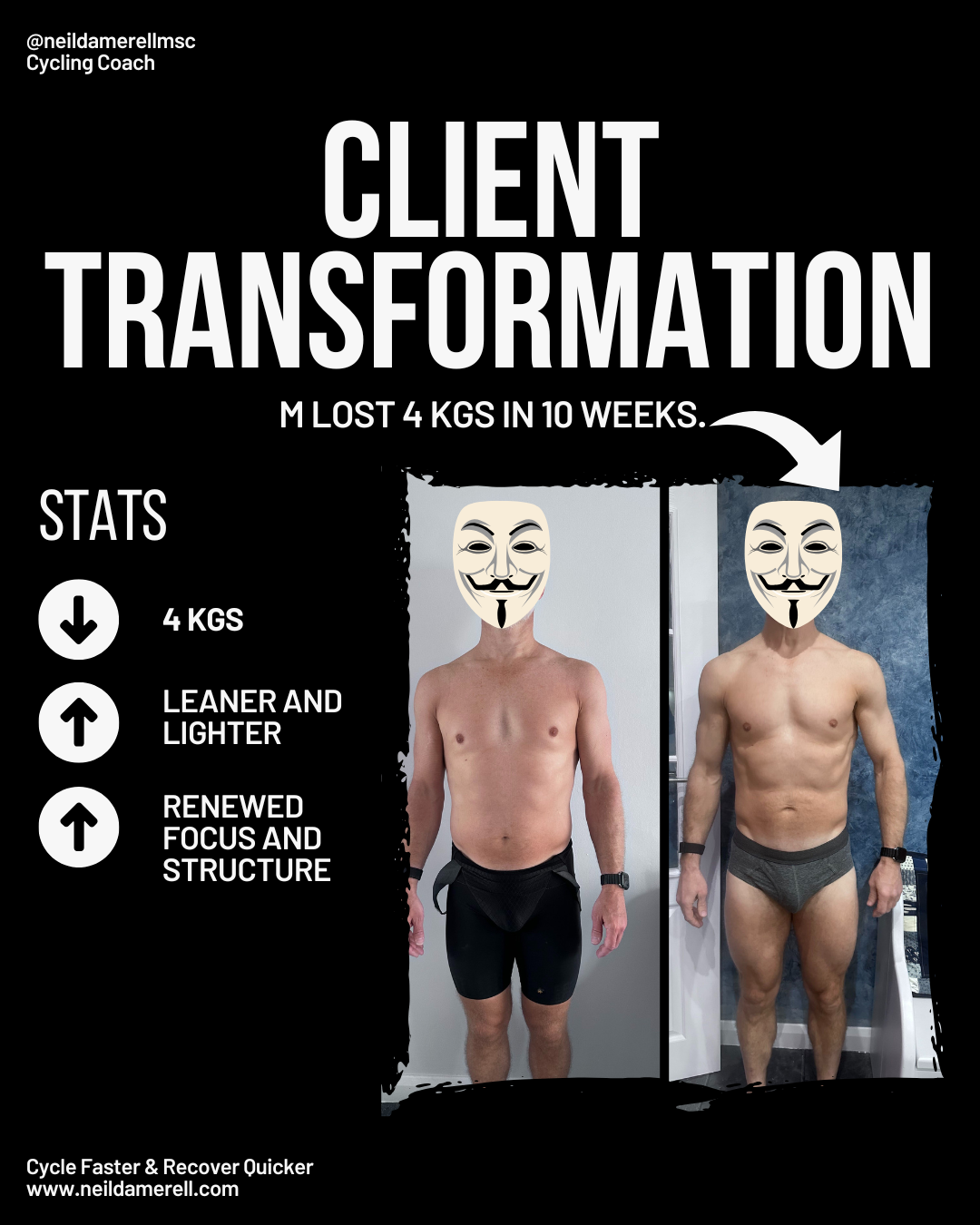
My client of the week this week is Mark.
Mark is 52 and works a very physical job installing AV equipment — TVs, speakers, full home setups. He’s also a cyclist who, for years, was stuck in that classic weekend warrior loop. He’d ride when he could, miss weeks when life got busy, then lose momentum completely when an injury cropped up.
Before we started working together, his biggest frustration wasn’t that he didn’t love cycling. It was that he couldn’t enjoy it the way he wanted to.
He’d go out with his mates and get dropped on the climbs. He’d spend rides hanging on for dear life, watching the group roll away while he tried to get home. And the worst part was the mental side of it — that pre-ride anxiety of wondering, “Am I going to be able to keep up today?”
He also realised he was doing plenty of “training”, but without understanding why.
He’d heard loads of advice — spin your legs, do this session, do that session — but it all felt generic, and he wasn’t getting consistent progress. He wanted structure, support, and someone to help him understand what he was actually doing, not just follow a plan blindly.
So we built a simple, structured routine around real life.
Over the five months we worked together 1-2-1, Mark has:
- Lost around 5–6 kg without extreme dieting
- Built consistency instead of riding in random bursts
- Improved his performance enough that he now rides more as an equal in his group — and sometimes ends up waiting at the top rather than being the one waited for
- Felt stronger on long rides and sportifs, with noticeably better pacing, comfort, and confidence
- Improved mobility and strength to the point that a bike fit showed he could ride in a more efficient position, with better movement and control
- Reduced stress off the bike as well — better routines, better hydration, better food choices, and calmer day-to-day
What I liked most about Mark’s feedback is that he kept coming back to the same point: understanding.
He said the biggest win was finally knowing why he was doing certain sessions, how fuelling actually works, and learning that you don’t have to starve yourself to lose weight — you need to fuel the work properly and stay consistent with the basics.
He also talked about how valuable the personal support was: being able to reach out, ask questions, and get quick answers when things didn’t make sense or when training load didn’t feel right. That human touch made the structure easier to follow, and the process far more enjoyable.
And that’s the whole point.
Mark didn’t just get fitter. He became more confident, more consistent, and started enjoying cycling again without that constant fear of being dropped.
Brilliant work, Mark.
Take a deeper dive into Mark's experience in our interview with him here.
Whenever you're ready, here are the ways I can help you:
- The Cycle Lean Collective: Get ready to transform your fitness journey with our new and improved 1-2-1 coaching programme.
- The Cycle Lean Blueprint: The science-backed 12-week blueprint to cycle leaner, climb stronger, and become the most resilient version of yourself.
I am an ambassador for:
Awesome Supplements: Award Winning Supplements — Our plant-based awesome protein powder is 100% UK-made with low-sugar, gluten & dairy-free.
The best protein powder I have ever tasted.
Get 10% off any product/ every time you make a purchase when using my code: DAMERELL10 at Awesome Supplements.