Why Your FTP Isn’t Improving (And It’s Not Your Training)
The Climb (#170)
Before we get into this…
If you’re reading this and thinking:
“This sounds exactly like me”
I help cyclists over 40 structure their training, manage fatigue, and improve performance without burning out.
If you want help applying this properly, you can apply for coaching here
Now let’s break this down.
When someone tells me their FTP is stuck, the first thing I don’t do is look at their training plan.
I look at everything around it.
Because what most people miss is this:
Your body doesn’t improve just because you train harder. It improves when it’s actually in a position to adapt.
The Reality I See Every Day

A lot of cyclists are trying to push performance while ignoring what’s happening under the surface.
They’re dealing with poor sleep, high stress, low energy, and in many cases, health markers that aren’t where they should be.
Some are carrying extra weight they’re struggling to shift. Others are under-fuelling while trying to train harder.
From the outside, it looks like a training problem.
In reality, it’s a physiology problem.
Why Training Harder Isn’t Working
Training creates stress on the body. Every session you do disrupts your internal systems. Muscle fibres break down, glycogen stores are depleted, and stress hormones like cortisol rise.
For your FTP to improve, your body needs to recover from that stress and then adapt. This is known as the supercompensation model. If recovery doesn’t happen properly, the adaptation never takes place.
This is why more training doesn’t always lead to better performance. Without adequate recovery, you simply accumulate fatigue.
Research has shown that excessive training without sufficient recovery leads to performance decline rather than improvement.
Reference: https://pubmed.ncbi.nlm.nih.gov/23247672/
The Role of Sleep in Performance

Sleep is one of the most powerful recovery tools available, yet it’s often the most overlooked. I regularly see patients in the clinic tell me that the average amount of sleep there are getting is around 6 hours per night. Way below the recommended 7-9 hours.
During deep sleep, your body releases growth hormone, which supports muscle repair and recovery. Glycogen stores are replenished, and your nervous system resets.
When sleep is compromised, all of these processes are affected.
Studies have shown that sleep restriction reduces endurance performance, increases perceived effort, and limits time to exhaustion. In simple terms, everything feels harder, and you can’t produce the same power.
Nutrition and Energy Availability

Cycling performance relies heavily on carbohydrate availability.
Your muscles use glycogen as their primary fuel source during moderate to high-intensity efforts. If those stores are low, your ability to produce power drops significantly.
This is why sessions feel harder when you’re under-fuelled. It’s not always a fitness issue. It’s often an energy issue.
There’s also a condition known as Relative Energy Deficiency in Sport (RED-S), where chronic under-fuelling leads to impaired recovery, reduced performance, and long-term health consequences.
Many cyclists fall into this without realising, especially when trying to lose weight while training hard.
Reference: https://pubmed.ncbi.nlm.nih.gov/21660838/
Reference: https://bjsm.bmj.com/content/52/11/687
Body Composition and Efficiency
Improving your body composition can have a significant impact on your cycling performance, particularly when it comes to your power-to-weight ratio.
Carrying excess body fat increases the energy cost of movement, especially on climbs. Reducing that weight gradually can improve efficiency without needing to increase absolute power.
However, this needs to be approached carefully. Aggressive dieting alongside hard training can lead to muscle loss and reduced performance.
Research suggests that gradual fat loss combined with proper fuelling and protein intake leads to better outcomes for endurance athletes.
See How I Gained 18 Watts on My FTP and Lost 2 Kilos in 8 Weeks Riding Just 5 Hours a Week
Stress, Recovery, and the Nervous System
Training is only one form of stress.
Work, lifestyle, and mental load all contribute to your overall stress levels. Your body doesn’t differentiate between them. It simply responds to the total load.
When stress is consistently high, your body shifts into a more sympathetic state, often described as “fight or flight.” This reduces your ability to recover, increases fatigue, and impacts performance.
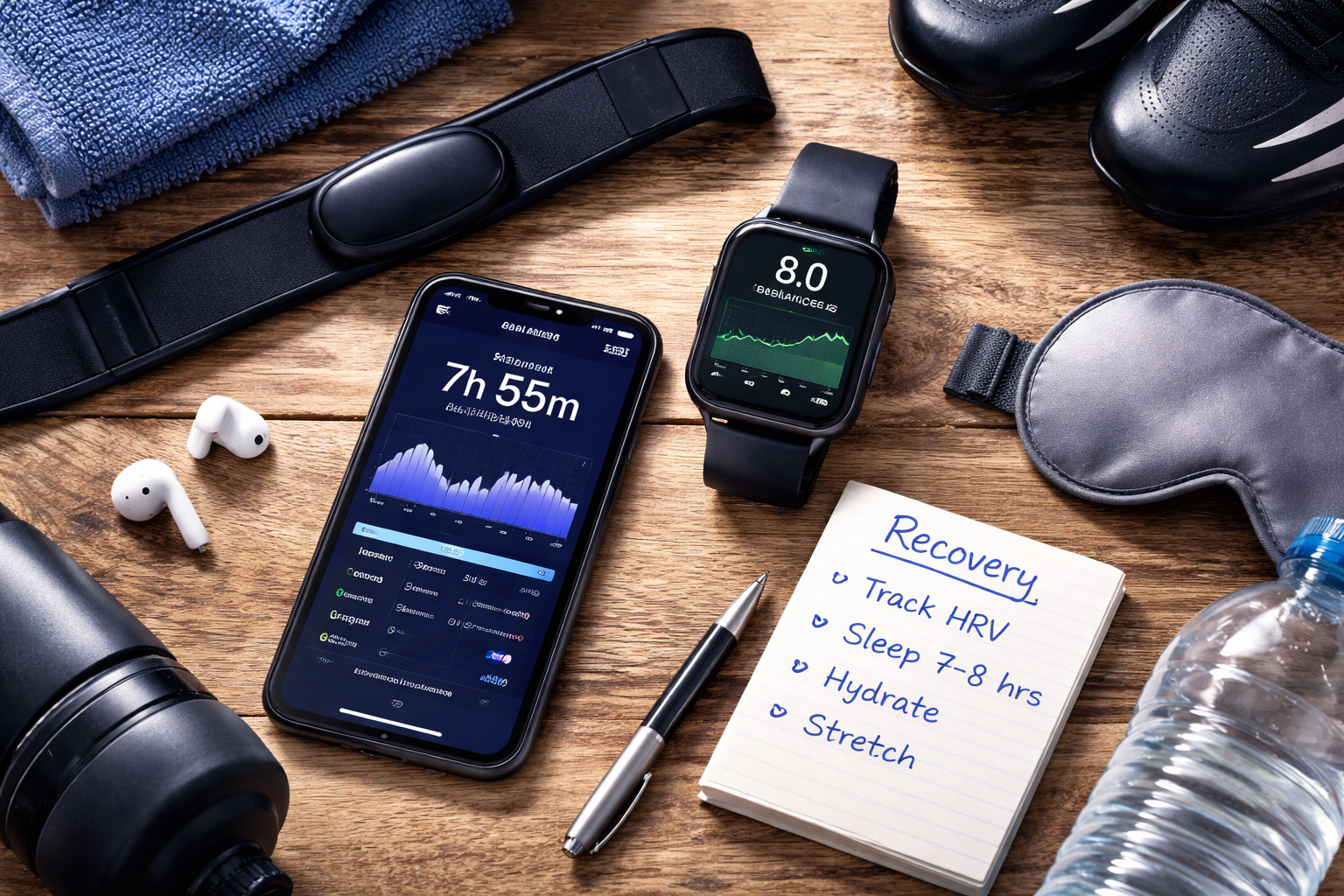
Heart rate variability (HRV) is often used as a marker to assess this balance. Lower HRV typically indicates higher stress and reduced recovery capacity.
What Actually Drives FTP Gains
The biggest improvements I see don’t come from adding more intensity.
They come from fixing the foundations.
When sleep improves, recovery improves.
When nutrition is aligned, performance improves.
When body composition is managed properly, efficiency improves.
When stress is controlled, consistency improves.
And once those pieces are in place, the training finally starts to deliver results.
The Shift Most Cyclists Need To Make
Instead of asking how to train harder, ask whether your body is ready to benefit from the training you are already doing.
Because if it isn’t, adding more work will not solve the problem.
What I Look At First
When someone comes to me with a plateaued FTP, I’m not immediately adjusting their training plan.
I’m looking at their sleep, their fuelling, their stress levels, and how they’re recovering between sessions.
In many cases, small improvements in these areas lead to bigger performance gains than any change in intervals or volume.
Final Thought
If your FTP feels stuck right now, take a step back.
It might not be your training that needs fixing.
It might be your ability to recover from it.
And once that’s in place, progress tends to follow much more naturally.
Whenever you're ready, here are the ways I can help you:
- The Cycle Lean Collective: Personalised 1:1 Coaching for Cyclists Who Want to Ride Stronger and Leaner — Without Wasting Hours Training. Start Today.
- The Cycle Lean Blueprint: The science-backed 12-week blueprint to cycle leaner, climb stronger, and become the most resilient version of yourself.
I am an ambassador for:
Awesome Supplements: Award Winning Supplements — Our plant-based awesome protein powder is 100% UK-made with low-sugar, gluten & dairy-free.
The best protein powder I have ever tasted.
Get 10% off any product/ every time you make a purchase when using my code: DAMERELL10 at Awesome Supplements.