How to Lose Fat with Cycling When You Only Have 4–6 Hours a Week

The Climb (#158)
Many cyclists try to lose weight by riding longer at an easy pace, but for riders with limited time, interval training is often more effective. This week's THE CLIMB newsletter explains how structured cycling intervals drive fat loss, how to use them safely, and how to combine them with recovery and nutrition for sustainable results.
One of the biggest mistakes I see cyclists make when trying to lose weight is assuming they need more time on the bike. Longer rides. More miles. More hours.
That approach works if you’ve got unlimited time. Most people don’t.
If you’re juggling work, family, and life, squeezing in 4–6 hours a week is already a win. And in that scenario, interval training becomes one of the most powerful tools you can use for fat loss, if it’s done properly.
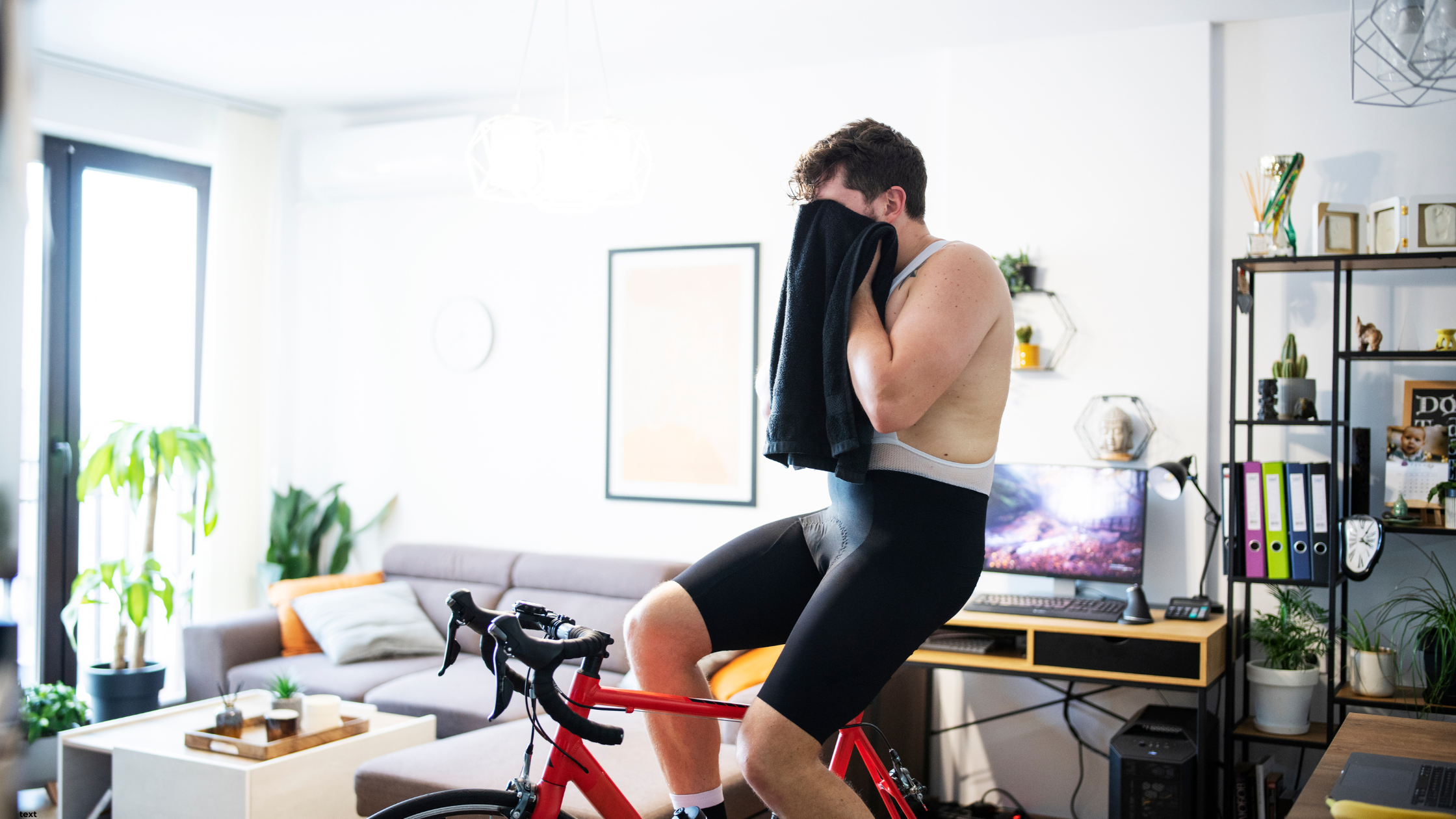
The reason intervals work so well is simple. They create a strong training stimulus in a short amount of time. Short bouts of higher intensity increase energy expenditure, improve insulin sensitivity, and raise overall training quality without requiring endless hours in the saddle.
That doesn’t mean riding easy is useless. It just means easy riding on its own isn’t the most efficient route to fat loss when time is tight.
Where intervals often go wrong is when people overdo them. Too many hard sessions, poor recovery, and under-fuelling quickly turn a smart strategy into burnout. That’s why structure matters.

For most riders training 4–6 hours a week, the sweet spot is one to two interval sessions per week, supported by easier endurance rides and at least one proper rest or recovery day.
Here are three interval styles that work particularly well for fat loss without wrecking your legs:
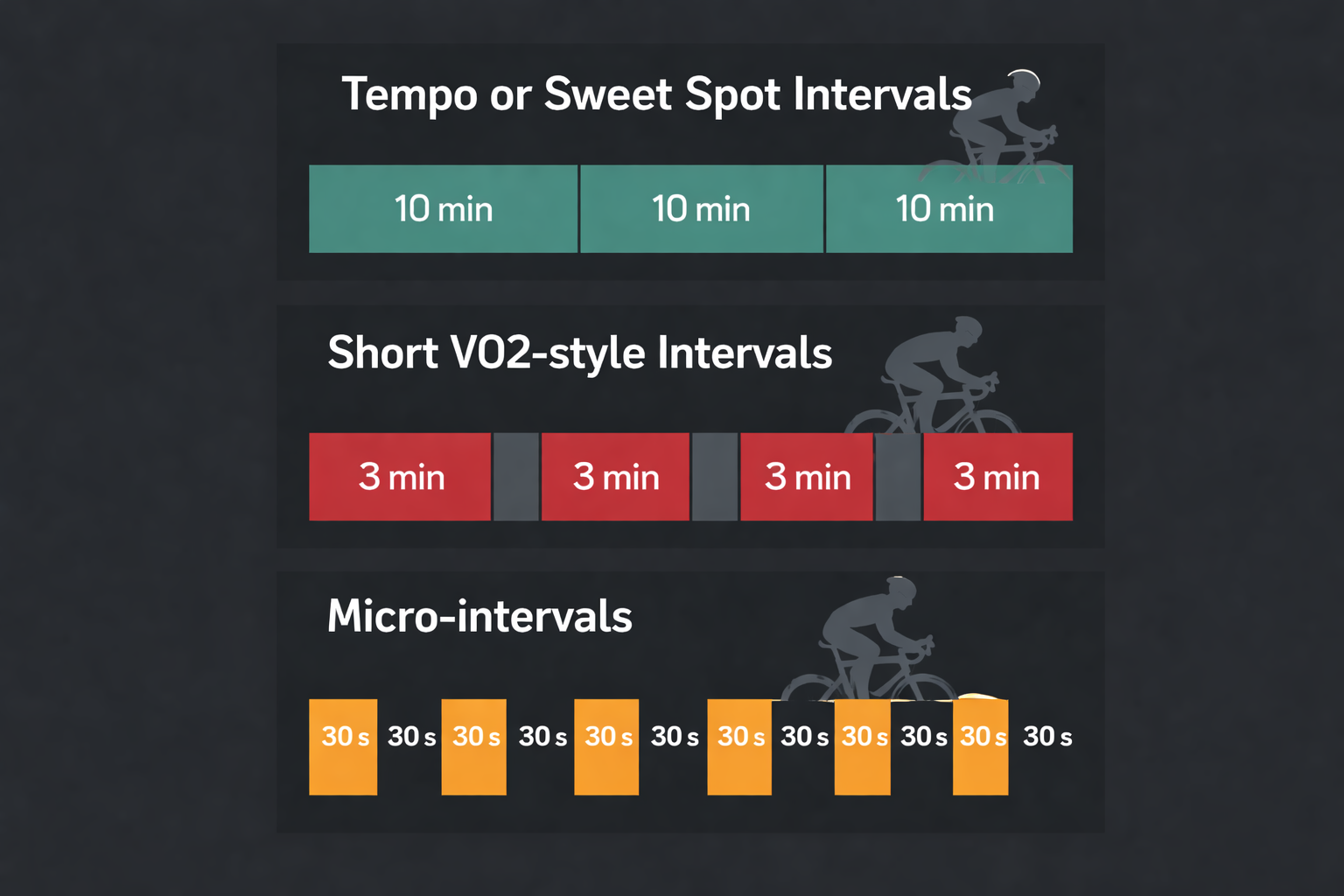
1. Tempo or Sweet Spot Intervals
Sustained efforts just below threshold. These improve aerobic efficiency and burn a lot of energy without the stress of all-out efforts.
Example: 3 × 10 minutes at a steady, uncomfortable but controlled pace.
2. Short VO2-style Intervals
Hard efforts with full recovery. These boost fitness quickly and raise overall calorie burn. Example: 5 × 3 minutes hard with equal recovery.
3. Micro-intervals
Short on/off efforts that keep intensity high but manageable.
Example: 30 seconds hard / 30 seconds easy for 10–15 minutes.
The key isn’t smashing yourself every session. It’s placing intensity where it counts, then letting your body recover so it can adapt.
Nutrition plays a big role here, too.

If you’re using intervals to drive fat loss, you still need to fuel them. Under-fuelling hard sessions often leads to poor performance, higher stress, and compensatory overeating later in the day. A small, consistent calorie deficit works far better than aggressive restriction.
Recovery is the final piece. Intervals are effective because they’re stressful. Without enough easy riding, sleep, and rest days, fat loss stalls and motivation drops. The goal is progress you can repeat week after week, not a short burst of effort that ends in exhaustion.
One important thing I always make clear with clients is this: interval training alone doesn’t guarantee weight loss.
In fact, many of the riders I work with who adopt this approach don’t immediately lose weight just by changing how they train. What they do see very quickly is a noticeable jump in performance. FTP goes up. Power feels easier to access. Watts per kilo improves because the top end moves first.
And that’s an important distinction.
Weight loss doesn’t come from what you do on the bike.
It comes from what you do off it.
Training determines how fit you get. Nutrition determines whether body weight changes. If you don’t address both, fat loss becomes inconsistent or doesn’t happen at all, no matter how hard the sessions feel.
That’s why, alongside tracking cycling performance, we track nutrition just as closely. Calories, protein intake, fuelling around sessions, and consistency across the week all matter. When those pieces line up, the results change dramatically.
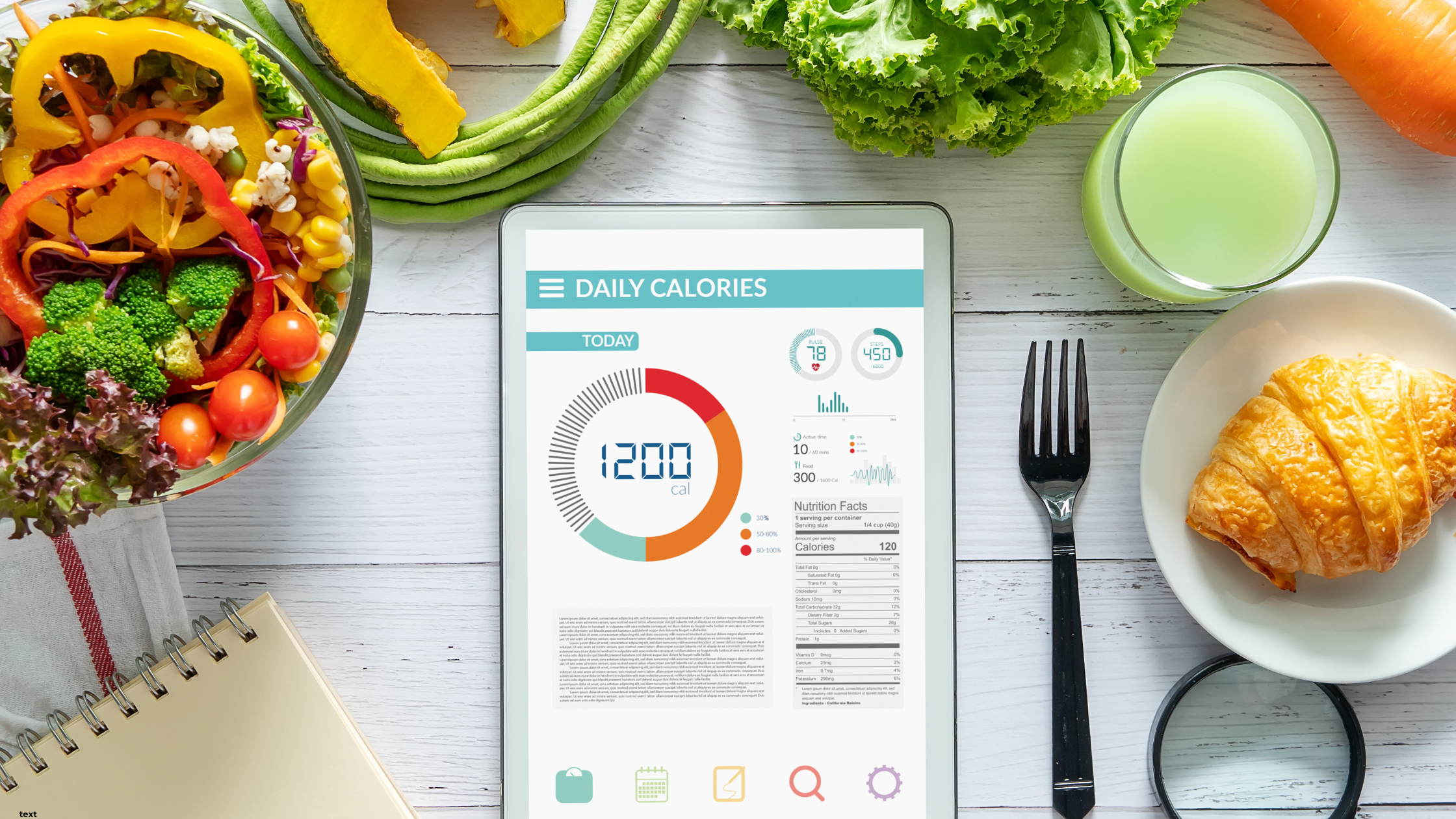
I’ve seen clients lose up to 12 kg in 12 weeks while training around five hours per week, and at the same time increase FTP and improve watts per kilo. Not by riding more, but by pairing structured training with sensible, sustainable nutrition.
This is also why I’m careful not to oversell intervals as a weight-loss solution on their own. They’re a powerful tool for improving fitness efficiently. But fat loss only happens when the off-bike habits support the work you’re doing on the bike.
Get both right, and the changes are not just faster, they’re repeatable.
Of course — here’s the revised Client of the Week, updated so the client is Laurent, while keeping the same structure, tone, and message:
Client of the Week — Laurent
My client of the week this week is Laurent.
Laurent has been working with me for over a year now. He originally joined one of the Cycle Lean Project group coaching programmes back in 2024 with a clear performance focus. Like many riders, he wanted to get fitter, stronger, and more consistent on the bike.
As time went on, the way we worked together naturally evolved.
With a very demanding job that takes up a lot of his time and mental energy, there came a point where training had to take a back seat. Instead of forcing sessions in, we shifted the focus off the bike — prioritising sleep, managing stress, and getting nutrition dialled in. The goal was simple: help Laurent feel better day to day so he could show up as his best self at work and at home.
From there, we rebuilt gradually.
We now have a much healthier balance between training and recovery, based entirely around his work and life commitments. Rather than chasing volume, we focus on quality. High-intensity interval sessions, some as short as 30 minutes. A stronger emphasis on weight training. And enough rest so fatigue doesn’t quietly accumulate.
This year, despite work still being intense, Laurent has commented on how much better he’s sleeping, how manageable stress feels, and how much he’s genuinely enjoying the gym again. Those off-bike wins have made a huge difference.
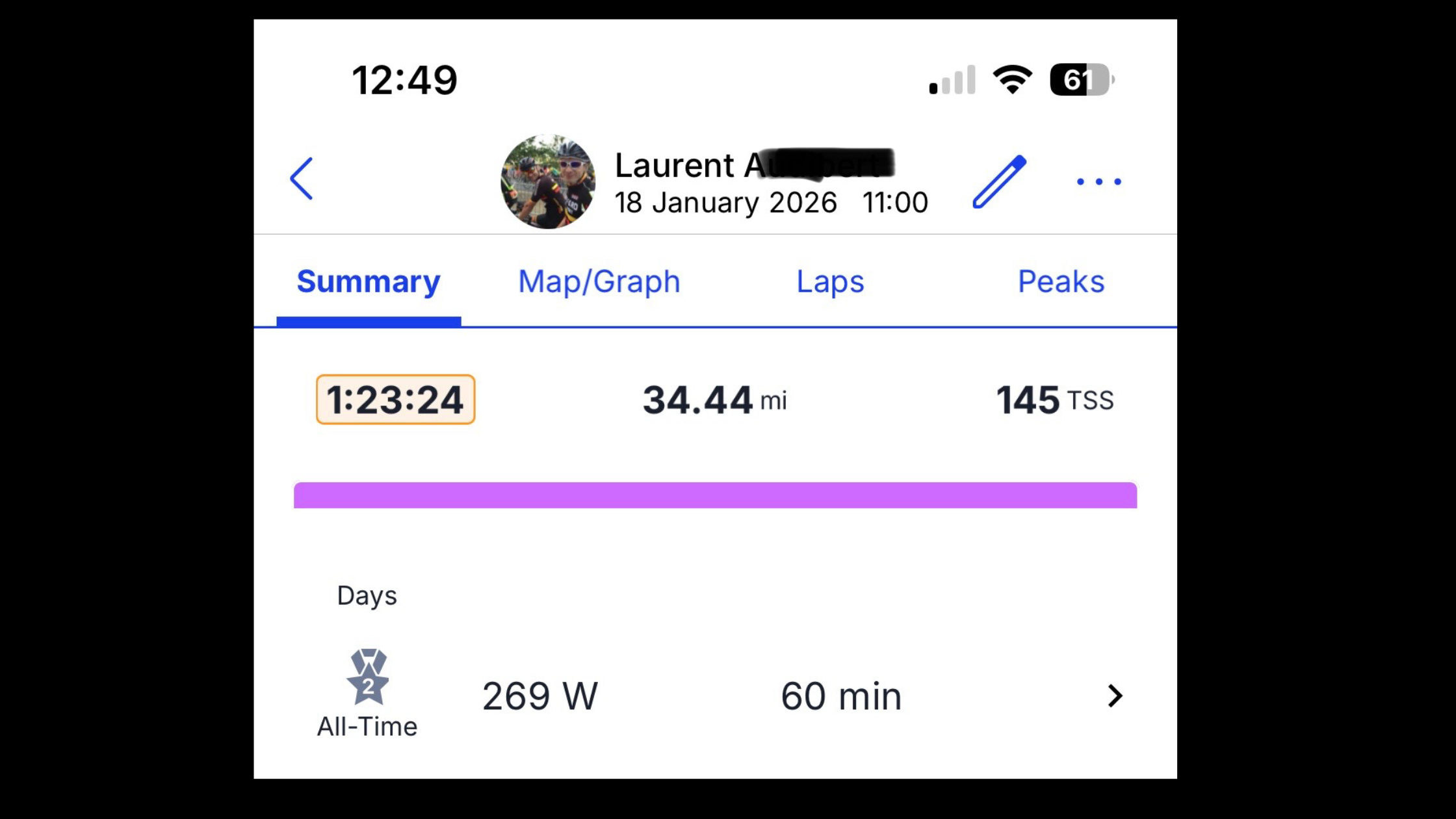
With relatively few hours on the bike, he’s now noticeably fresher each time he rides. And this week, he hit his second-best all-time 60-minute power — a great marker of just how well this approach is working.
Laurent’s progress is a great reminder that training isn’t about sacrificing everything to be faster or stronger. It’s about building a relationship and a structure that supports the person behind the athlete, so performance becomes a by-product rather than a burden.
I know how far Laurent has come, and seeing that progression makes me incredibly proud. He’s a joy to coach.
Well done, Laurent.
Whenever you're ready, here are the ways I can help you:
- The Cycle Lean Collective: Get ready to transform your fitness journey with our new and improved 1-2-1 coaching programme.
- The Cycle Lean Blueprint: The science-backed 12-week blueprint to cycle leaner, climb stronger, and become the most resilient version of yourself.
I am an ambassador for:
Awesome Supplements: Award Winning Supplements — Our plant-based awesome protein powder is 100% UK-made with low-sugar, gluten & dairy-free.
The best protein powder I have ever tasted.
Get 10% off any product/ every time you make a purchase when using my code: DAMERELL10 at Awesome Supplements.